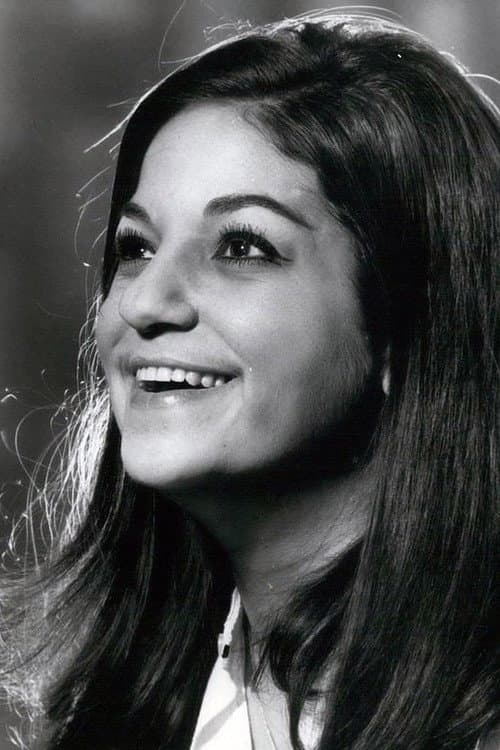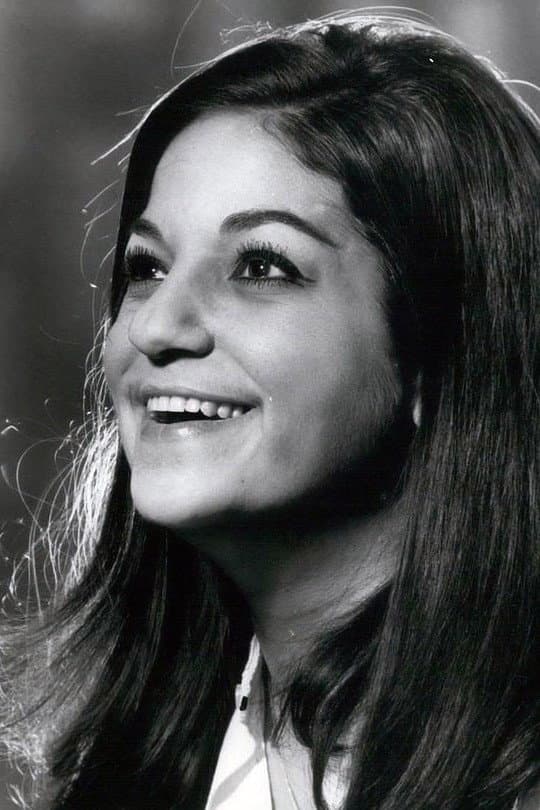
Frida Boccara
Danielle Frida Hélène Boccara (29 October 1940 – 1 August 1996) was a Moroccan-born French singer of Italian descent, who performed and recorded in a number of languages, including French, Spanish, English, Italian, German, Dutch and Russian. Boccara was born in Casablanca, Morocco, into a Jewish family of Italian origin that lived in Tunisia before they settled in Morocco. When she was 17, she moved from Casablanca to Paris, France, where she eventually started her artistic career as a singer. Boccara also had a brother and a sister in show business, composers Jean-Michel Braque (born Roger Boccara) and Lina Boccara. Her son, Tristan Boccara, was born in the mid-1970s and also became a singer known as Goldinski (he is also a composer, pianist and arranger). In 1964, Boccara had submitted the song "Autrefois" ("In the past") to the French Eurovision Song Contest selection panel, but she was unsuccessful. Five years later, at the Eurovision Song Contest 1969, held in Madrid, Spain, she represented France performing "Un jour, un enfant" ("A day, a child") – with music by Émile Stern and text by Eddy Marnay. Her song shared first place along with the entries from the Netherlands, the UK, and Spain, the first and last time more than one country was declared winner. Songwriter Eddy Marnay was her professional partner (most of the songs performed by Boccara were written by him), but she also performed songs composed by Jacques Brel, Georges Brassens, Charles Aznavour, Émile Stern, Michel Legrand, Michel Magne, Nino Rota and Mikis Theodorakis. "Cent mille chansons" ("A hundred thousand songs") was recorded in 1968 and earned her a gold disc, while "Un jour, un enfant" (1969) earned her a platinum disc and "Pour vivre ensemble" ("To live together", 1971) earned her another gold. Other of her famous songs include "Cherbourg avait raison" (1961), "Aujourd'hui" (1965), "Le moulins de mon cœur" (1969), "L'enfant aux cymbales" (1969), "Belle du Luxembourg" (1969), "La croix, l'étoile et le croissant" (1970), "Venise va mourir" (1970), "Trop jeune ou trop vieux" (1971), "Valdemosa" (1976), "L'année où Piccoli jouait Le choses de la vie" (1978), "Un monde en sarabande" (1979) and "La prière" (1979). In the late 1960s, she also recorded "Un pays pour nous", a song that was a French version of "Somewhere" (from the musical West Side Story). Leonard Bernstein, who composed the original melody, declared that Boccara's version was his favorite. Boccara renewed her links with Eurovision by participating in the French national finals of 1980 – performing "Un enfant de France" – and 1981 – with "Voilà comment je t'aime". However, neither song was selected. She died in 1996 in Paris, France, aged 55, from a pulmonary infection, after a decline in health. Source: Article "Frida Boccara" from Wikipedia in English, licensed under CC-BY-SA 3.0.